
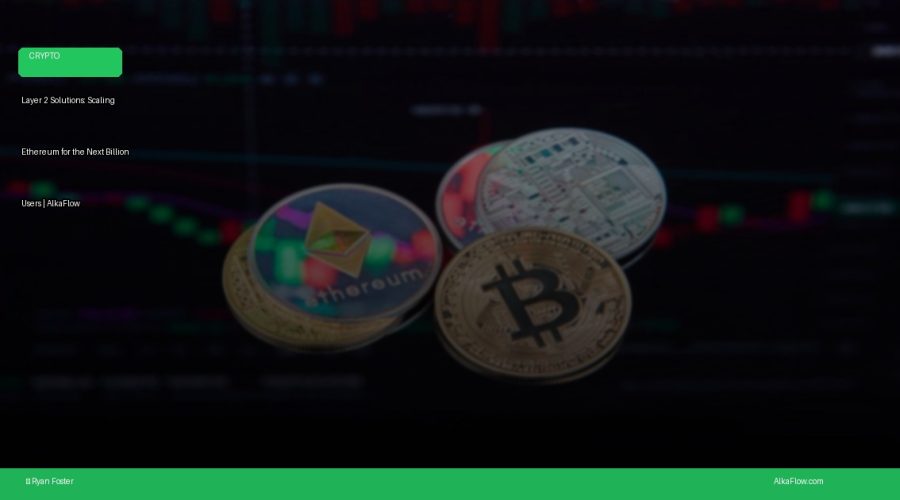
Imagine a digital highway clogged with traffic, where every vehicle pays a hefty toll just to inch forward. This is, in essence, the challenge Ethereum has faced as its popularity has soared. The solution? A suite of innovative technologies known as Layer 2 solutions, designed to supercharge Ethereum’s capacity and pave the way for onboarding the next billion users into the decentralized world.
📋 Table of Contents
For years, Ethereum has been the undeniable bedrock of decentralized finance (DeFi), NFTs, and countless decentralized applications (dApps). Its robust security and broad developer ecosystem are unparalleled. However, its success has also exposed its primary limitation: scalability. High demand often translates to network congestion and exorbitant transaction costs, making it inaccessible for many, particularly in emerging markets where micro-transactions are vital. This article will delve into how these crucial scaling technologies are reshaping the crypto landscape and what they mean for the future of digital economies.
The Ethereum Bottleneck: Why We Need Layer 2 Solutions

Ethereum, in its current form, operates as a single, powerful blockchain, processing transactions sequentially. While this ensures a high degree of security and decentralization, it inherently limits throughput. Ethereum’s mainnet typically handles around 15-30 transactions per second (TPS). Compare this to traditional payment processors like Visa, which can handle upwards of 24,000 TPS, and you quickly understand the bottleneck preventing widespread adoption of blockchain technology for everyday use.
This limited capacity manifests directly in high transaction costs, often referred to as ‘gas fees.’ During periods of peak network activity, these fees can skyrocket, sometimes costing tens or even hundreds of dollars for a single transaction. Such costs are prohibitive for many potential users, especially those in developing nations where the average daily income might be less than the cost of a single Ethereum transaction. This stark reality underscores the urgency for robust Ethereum scalability solutions that can maintain the network’s core values while dramatically increasing its processing power.
The core issue ties into the infamous blockchain trilemma – the inherent challenge of simultaneously achieving scalability, security, and decentralization. Ethereum prioritizes security and decentralization, a wise choice for a foundational layer, but one that necessitates off-chain solutions to achieve the necessary throughput for global adoption. Without these innovations, the promise of a truly global, permissionless financial system remains largely out of reach for much of the world’s population.
Understanding Different Layer 2 Solutions: The Scaling Toolbox
Layer 2 solutions are a diverse set of protocols built on top of the Ethereum mainnet (Layer 1) to process transactions more efficiently off-chain, then batch and settle them back on the mainnet. This approach offloads the bulk of the computational work from the main chain, significantly increasing transaction throughput and reducing transaction costs, all while inheriting the underlying security of Ethereum.
The most prominent and widely adopted Layer 2 solutions today are ‘rollups.’ These technologies execute transactions outside the main Ethereum blockchain but post transaction data back to Layer 1. There are two primary types of rollups:
- Optimistic Rollups: These assume transactions are valid by default and only run computation if a challenge arises. There’s a ‘dispute period’ (typically 7 days) during which anyone can submit a fraud proof if they detect an invalid transaction. Popular examples include Arbitrum and Optimism. While highly effective, the dispute period can lead to withdrawal delays.
- ZK-Rollups (Zero-Knowledge Rollups): These prove the validity of transactions cryptographically, without needing to execute them on Layer 1. They generate a ‘zero-knowledge proof’ for a batch of off-chain transactions, which is then verified by the mainnet. This method offers instant finality and stronger security guarantees, as validity is proven rather than assumed. Projects like zkSync, StarkNet, and Scroll are leading the charge in this rapidly evolving space.
Beyond rollups, other Layer 2 approaches include sidechains (like Polygon PoS, which has its own consensus mechanism but maintains a bridge to Ethereum), Plasma chains, and state channels. However, rollups, particularly zk-rollups, are widely considered to be the long-term scaling solution for Ethereum due to their superior security model and efficiency. The Total Value Locked (TVL) across Layer 2 networks has consistently grown, demonstrating strong user and developer confidence, with Arbitrum and Optimism alone often commanding billions in assets.
“Layer 2 solutions are not merely an add-on; they are the essential infrastructure enabling Ethereum to evolve from a niche developer platform into a global settlement layer. Without them, the promise of decentralized finance for everyone remains just that – a promise.” – Vitalik Buterin, Ethereum Co-Founder
Mass Adoption and Emerging Markets: The True Potential of Layer 2 Solutions
As an investment strategist specializing in emerging markets, I’ve seen firsthand the transformative potential of accessible financial technology. This is where Layer 2 solutions truly shine. The drastic reduction in transaction costs and significant increase in throughput offered by these scaling technologies are game-changers for regions that have historically been underserved by traditional banking systems.
Consider the impact on remittances. Millions of individuals in emerging economies rely on sending and receiving money across borders, often incurring high fees and facing slow processing times with traditional services. Layer 2s enable near-instant, low-cost international transfers, empowering migrant workers and their families. Similarly, the ability to engage in micro-transactions, where amounts as small as a few cents can be sent efficiently, unlocks entirely new economic models for local commerce, digital payments, and access to decentralized applications for communities previously priced out.
The improved user experience on Layer 2 networks also plays a crucial role in mass adoption. Faster transaction times and predictable, lower fees make interacting with dApps, trading NFTs, or participating in DeFi protocols much more appealing and less intimidating for new users. This ease of use is critical for expanding the crypto ecosystem beyond early adopters to a broader, global audience. Governments and institutions in several developing nations are already exploring blockchain solutions for various services, and the cost-efficiency brought by Layer 2s makes these initiatives far more viable. (See also: Crypto Miners Stealing Power: Southeast Asia’s Hidden Energy Crisis | AlkaFlow)
The Road Ahead: Challenges and the Future of Ethereum Scaling
While Layer 2 solutions offer immense promise, the journey isn’t without its challenges. The ecosystem is still maturing, and issues such as user fragmentation across different Layer 2s, the complexity of bridging assets between them, and ensuring seamless data availability remain areas of active development. However, the Ethereum community and Layer 2 teams are actively working on these problems, with significant progress being made.
Ethereum’s own roadmap, particularly with upgrades like Proto-Danksharding and eventually Danksharding, is designed to further enhance data availability for rollups, making them even more efficient and secure. This symbiotic relationship between Layer 1 and Layer 2 is crucial: Ethereum provides the robust security and decentralized settlement layer, while Layer 2s provide the necessary speed and affordability. It’s not a competition but a collaborative effort to build a truly global, scalable blockchain.
From my vantage point as an investment strategist, the ongoing development and adoption of Layer 2 technologies represent one of the most significant investment themes in the crypto space. They are not just technological upgrades; they are foundational shifts that unlock new markets and empower millions. The companies and protocols building out this infrastructure are creating the arteries of the future digital economy, especially in regions poised for explosive growth. (See also: Bitcoin vs Ethereum: Which is the Better Long-Term Investment?)
The future of Ethereum and the broader decentralized web hinges on the success of Layer 2 solutions. They are the conduits through which the network will achieve the massive scale required to onboard billions of users, facilitate global financial inclusion, and power the next generation of decentralized applications. As these technologies mature, we can expect a dramatic expansion of what’s possible on-chain, making secure, transparent, and affordable digital interactions a reality for everyone, everywhere. Staying informed about these developments is not just about understanding crypto; it’s about understanding the future of global finance.
❓ Frequently Asked Questions
What are Layer 2 solutions for Ethereum?
Layer 2 solutions are off-chain protocols built on top of the Ethereum mainnet designed to increase transaction throughput and reduce costs. They process transactions off the main chain and then batch and settle them back on Layer 1, inheriting Ethereum’s security.
How do Layer 2 solutions help with Ethereum’s scalability?
By moving most transaction processing off-chain, Layer 2 solutions significantly reduce the load on the Ethereum mainnet. This allows for many more transactions per second and drastically lowers gas fees, making the network more accessible and efficient for users.
What are the main types of Layer 2 solutions?
The primary types are rollups, which include Optimistic Rollups (e.g., Arbitrum, Optimism) and ZK-Rollups (e.g., zkSync, StarkNet). Other solutions include sidechains, Plasma, and state channels, though rollups are currently the most prominent for scaling Ethereum.
Why are Layer 2 solutions important for emerging markets?
Layer 2 solutions are crucial for emerging markets because they enable low-cost micro-transactions and remittances, making decentralized finance accessible to populations underserved by traditional banking. Reduced fees and faster transactions facilitate financial inclusion and new economic opportunities.
What is the future outlook for Layer 2 solutions and Ethereum?
The future looks bright, with continuous development in Layer 2 technologies and Ethereum’s own upgrades (like Proto-Danksharding) designed to support them further. Layer 2s are seen as vital for Ethereum to achieve global mass adoption, enabling billions of users to interact with decentralized applications efficiently and affordably.



0 Comments