

Imagine a tiny snowball, starting its descent down a long, snow-covered hill. Initially, it’s small, growing almost imperceptibly. But as it rolls further, gathering more snow with each turn, its size accelerates exponentially, becoming a colossal mass by the time it reaches the bottom. This vivid image perfectly encapsulates the power of compound interest, an investing principle so potent that Albert Einstein reportedly called it the eighth wonder of the world. It is the miraculous ability of your money to earn returns, and then for those returns to earn returns themselves, creating a self-perpetuating cycle of growth that can profoundly shape your financial future.
📋 Table of Contents
At AlkaFlow, we consistently emphasize that financial mastery isn’t about complex algorithms or insider trading; it’s often about understanding and consistently applying fundamental principles. Among these, the concept of compounding stands as a titan, offering a clear path to substantial wealth accumulation for anyone willing to embrace its magic. Today, we’ll explore why starting your investment journey early isn’t just a good idea, but the single most impactful decision you can make to harness this incredible force and secure the prosperity you envision for yourself.
Understanding The Power of Compound Interest: The Snowball Effect
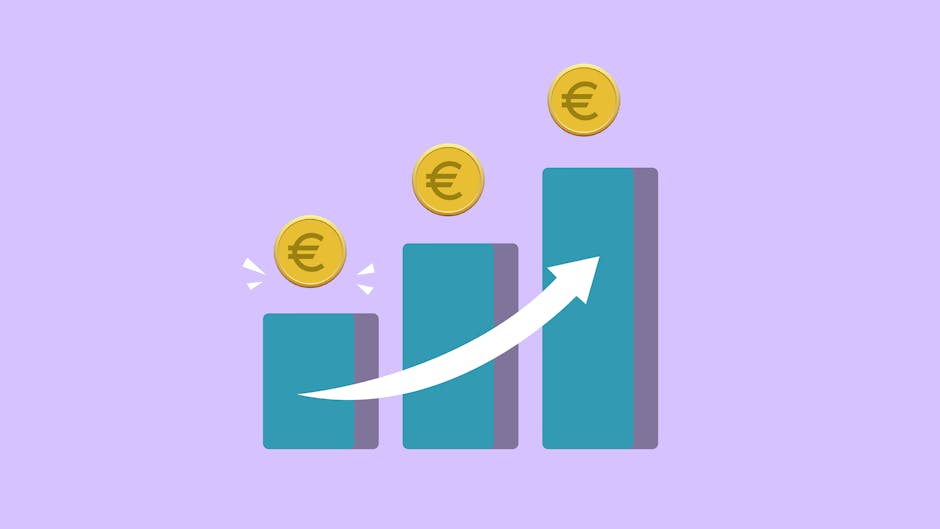
At its core, compound interest is simply interest on interest. When you invest, your initial capital, or principal, earns a return. Instead of withdrawing that return, you reinvest it. Now, your next set of returns is calculated not just on your original principal, but on your principal plus the accumulated interest. This might sound subtle, but over time, especially over decades, this seemingly small difference becomes monumental.
Consider a simple example: If you invest $1,000 at a 10% annual interest rate, after one year, you’ll have $1,100. If you take out the $100 interest, your principal remains $1,000, and you’ll earn another $100 next year. This is simple interest. However, with compound interest, you leave the $100 in. In the second year, your 10% interest is calculated on $1,100, earning you $110. Your balance becomes $1,210. That extra $10 might seem negligible, but extend this over 20, 30, or 40 years, and the difference becomes astronomical, illustrating the true magnitude of investment growth.
The Mathematics of Time and Returns
The formula for compound interest, A = P(1 + r/n)^(nt), might look intimidating, but its components are straightforward: A is the future value of the investment/loan, P is the principal investment amount, r is the annual interest rate, n is the number of times that interest is compounded per year, and t is the number of years the money is invested. What stands out most here is ‘t’ – time. The longer your money is invested, the more periods it has to compound, and the more significant the growth becomes. It’s a testament to patience being a virtue in the investing world.
“Compound interest is the eighth wonder of the world. He who understands it, earns it; he who doesn’t, pays it.” – Albert Einstein
This quote attributed to Einstein is a powerful reminder that compounding works both ways: it can build immense wealth for investors, but it can also lead to crippling debt for those who borrow at high interest rates without understanding the long-term implications. For our purposes, we focus on harnessing it for our benefit, turning small, consistent contributions into a substantial long-term savings fund.
Why Starting Early Maximizes The Power of Compound Interest
The single most crucial factor in optimizing compound interest is time. The earlier you begin, the more time your investments have to grow, and the more opportunities your earnings have to earn their own earnings. This isn’t just about accumulating more principal; it’s about giving your money a head start in the race against time, allowing it to multiply exponentially.
Let’s illustrate with a classic scenario: the tale of two investors, Jane and John. Jane starts investing $200 per month at age 25. John, thinking he has plenty of time, waits until age 35 to start investing the same $200 per month. Both invest until they retire at age 65, assuming a conservative average annual return of 7%.
- Jane (starts at 25): Invests for 40 years. Total contributions: $200/month * 12 months/year * 40 years = $96,000. Her portfolio could grow to approximately $537,000.
- John (starts at 35): Invests for 30 years. Total contributions: $200/month * 12 months/year * 30 years = $72,000. His portfolio could grow to approximately $252,000.
Even though Jane only contributed an additional $24,000 over John, her final portfolio is more than double his! This dramatic difference of over $280,000 is almost entirely due to the extra decade of compounding she gained. That’s the undeniable truth of early investing: time is your most valuable asset when it comes to leveraging the power of compound interest.
The Rule of 72: A Quick Calculation for Doubling Your Money
To grasp the speed at which compounding works, we often refer to the ‘Rule of 72’. This simple formula allows you to estimate how long it will take for your investment to double, given a fixed annual rate of return. You simply divide 72 by the annual interest rate. For example, if you earn an average of 8% per year, your money will roughly double every 9 years (72 / 8 = 9). This intuitive rule underscores the incredible acceleration that compounding brings to your wealth accumulation over time, making it a valuable tool for quick estimations.
Understanding this rule highlights why even a modest return, consistently applied over a long period, can lead to substantial wealth. It empowers you to visualize the long-term impact of your investment choices and reinforce the importance of not just investing, but investing intelligently and, most crucially, investing for the long haul. This perspective shifts the focus from short-term market fluctuations to the overarching trajectory of your financial growth.
Strategies to Harness Compound Interest for Your Financial Future
Now that we’ve established the ‘why’, let’s delve into the ‘how’. Maximizing the power of compound interest involves a combination of smart investment choices, consistent contributions, and a disciplined approach. It’s not about trying to get rich overnight, but rather about building a robust framework for sustained investment growth.
Automate Your Investments
One of the simplest yet most effective strategies is to automate your contributions. Set up automatic transfers from your checking account to your investment accounts (e.g., 401(k), IRA, brokerage account) every payday. This removes the temptation to spend the money and ensures consistent investment, which is critical for compounding. Think of it as ‘paying yourself first’ before other expenses, making saving a non-negotiable part of your budget and routine.
Diversify Your Portfolio
While the market has its ups and downs, historically, diversified portfolios have delivered consistent returns over the long run. Investing in a mix of assets like stocks, bonds, and potentially real estate can help mitigate risk while still capturing market growth. For instance, the S&P 500 has historically delivered an average annual return of around 10-12% before inflation over extended periods, making broad market index funds a popular choice for long-term investors seeking reliable compounding. (See also: NYT Q2 Earnings Highlights: What Investors Need to Know | AlkaFlow)
Reinvest Dividends and Earnings
Many stocks and mutual funds pay dividends. Instead of taking these as cash, choose to reinvest them. This means your dividend payments automatically buy more shares of the same investment, increasing your principal and further accelerating your compounding. This strategy is a prime example of how to make your money work harder for you, turning small income streams into additional capital that compounds over time. (See also: Gold vs Stocks: A Comprehensive Long-Term Investment Comparison)
Leverage Tax-Advantaged Accounts
Accounts like 401(k)s and IRAs offer significant tax benefits that supercharge compounding. Contributions to traditional 401(k)s and IRAs are often tax-deductible, reducing your taxable income now, and your investments grow tax-deferred until retirement. Roth IRAs, on the other hand, allow your investments to grow and be withdrawn tax-free in retirement. These vehicles are designed to encourage long-term savings and are excellent tools for maximizing wealth accumulation through compounding.
Stay Consistent and Patient
The biggest enemy of compound interest is impatience. Market volatility can be unsettling, but successful long-term investors understand that dips are often opportunities, not reasons to panic. Stick to your investment plan, continue your regular contributions, and let time work its magic. As a financial journalist and enthusiast of robust, decentralized systems, I see parallels in how consistent, small ‘blocks’ of investment build into an incredibly resilient and powerful chain of wealth over time. This consistent approach is what truly unlocks the full potential of the power of compound interest.
Embracing the power of compound interest is perhaps the most straightforward yet profound decision you can make for your financial well-being. It’s not about finding the next hot stock or timing the market perfectly; it’s about starting early, staying consistent, and allowing the incredible force of time and reinvestment to do the heavy lifting. The journey to a robust financial future begins with that first, small, consistent step. Don’t underestimate its potential; start today, and watch your financial snowball grow into an unstoppable force.
❓ Frequently Asked Questions
What is compound interest?
Compound interest is interest earned on an initial principal amount, and also on the accumulated interest from previous periods. It’s often described as ‘interest on interest,’ causing your money to grow at an accelerating rate over time.
Why does starting early matter most for compound interest?
Starting early gives your investments more time to compound. The longer your money is invested, the more opportunities your earnings have to earn their own returns, leading to exponential growth that significantly outweighs later, larger contributions.
What is the Rule of 72 and how does it relate to compound interest?
The Rule of 72 is a quick mental math shortcut to estimate how long it will take for an investment to double in value, given a fixed annual rate of return. You simply divide 72 by the annual interest rate (e.g., at 8% interest, your money doubles in 9 years), highlighting the power of compounding.
What types of investments benefit most from compound interest?
Long-term investments like stocks, mutual funds, exchange-traded funds (ETFs), and retirement accounts (401(k)s, IRAs) are ideal for harnessing compound interest. These vehicles are designed for growth over many years, allowing the ‘interest on interest’ effect to accumulate substantial wealth.
How can I maximize the power of compound interest in my own financial plan?
To maximize compounding, start investing as early as possible, contribute consistently (ideally automatically), reinvest any dividends or earnings, utilize tax-advantaged accounts like 401(k)s and IRAs, and maintain a diversified portfolio with a long-term perspective.


0 Comments